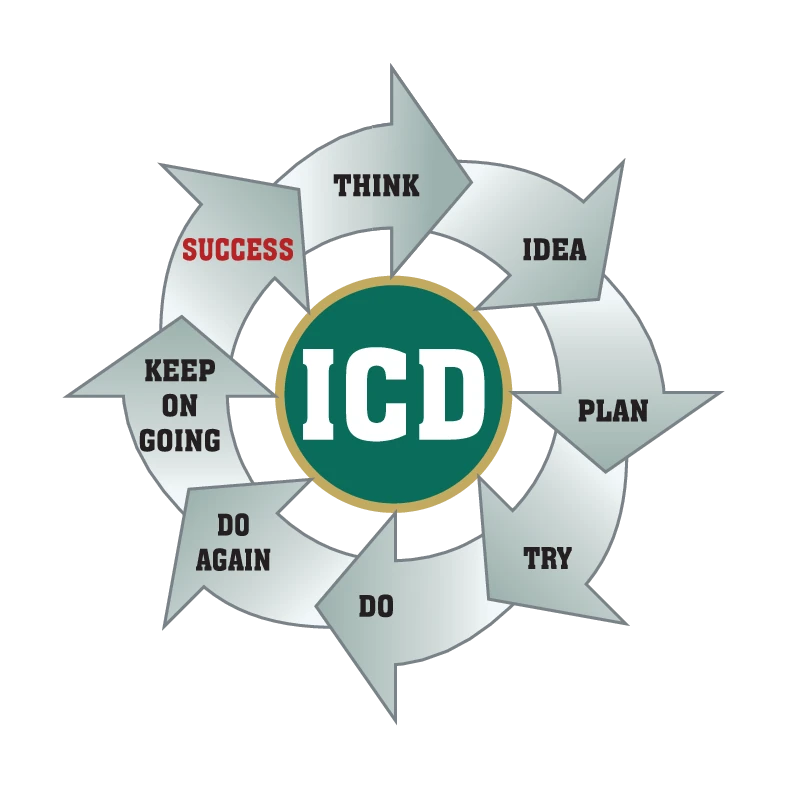
- Pharmacology
Pharmacology is the study of how chemical substances interact with living organisms to produce biological effects. It focuses on understanding pharmacokinetics (how the body handles a drug) and pharmacodynamics (how the drug affects the body) to develop safe and effective treatments.
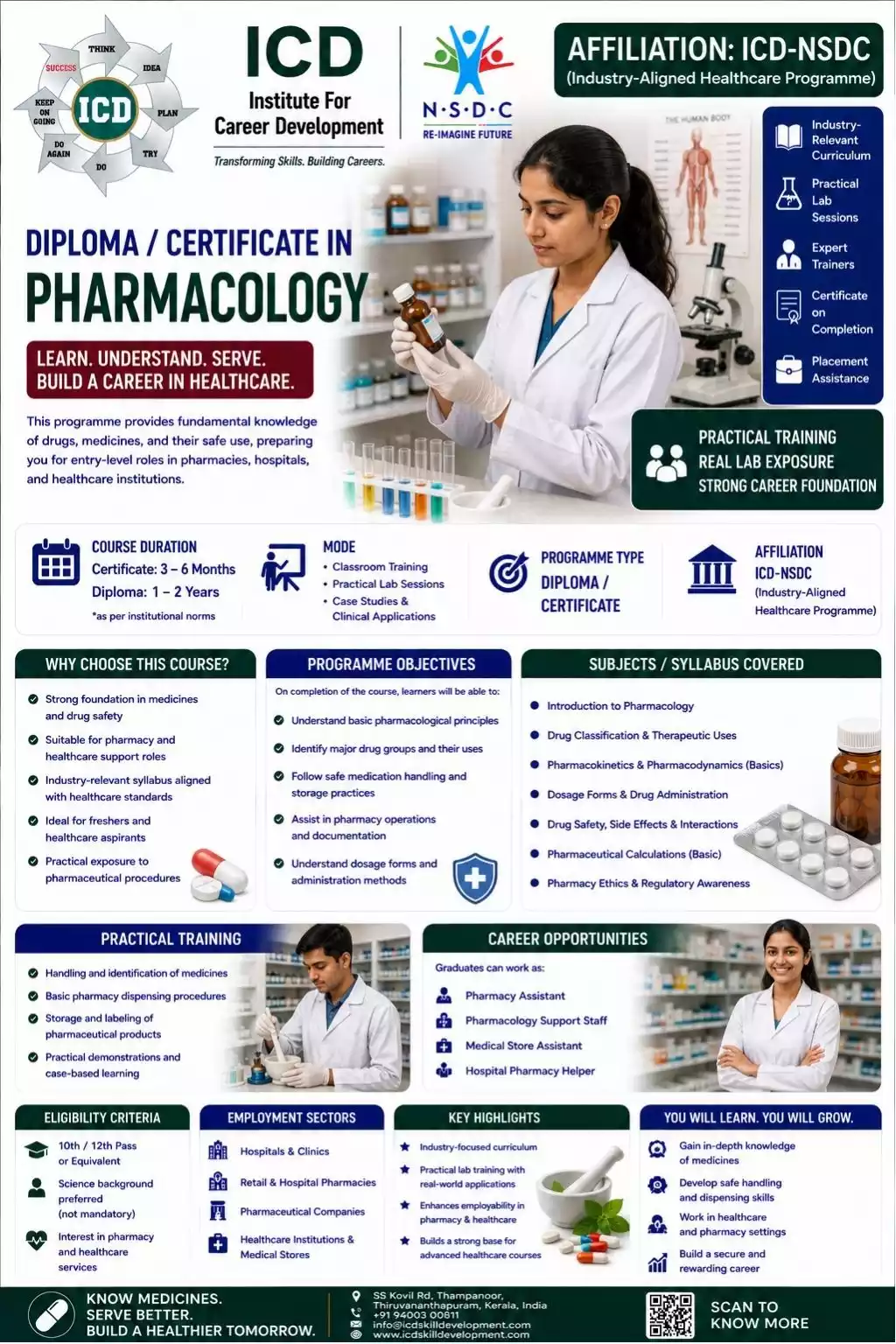
2. Pharmacy Practice
Pharmacy Practice focuses on the professional role of the pharmacist in community and hospital settings, emphasizing patient-centered care and medication counseling. It bridges the gap between drug manufacture and the patient, ensuring that medications are dispensed accurately and used appropriately to improve health outcomes.
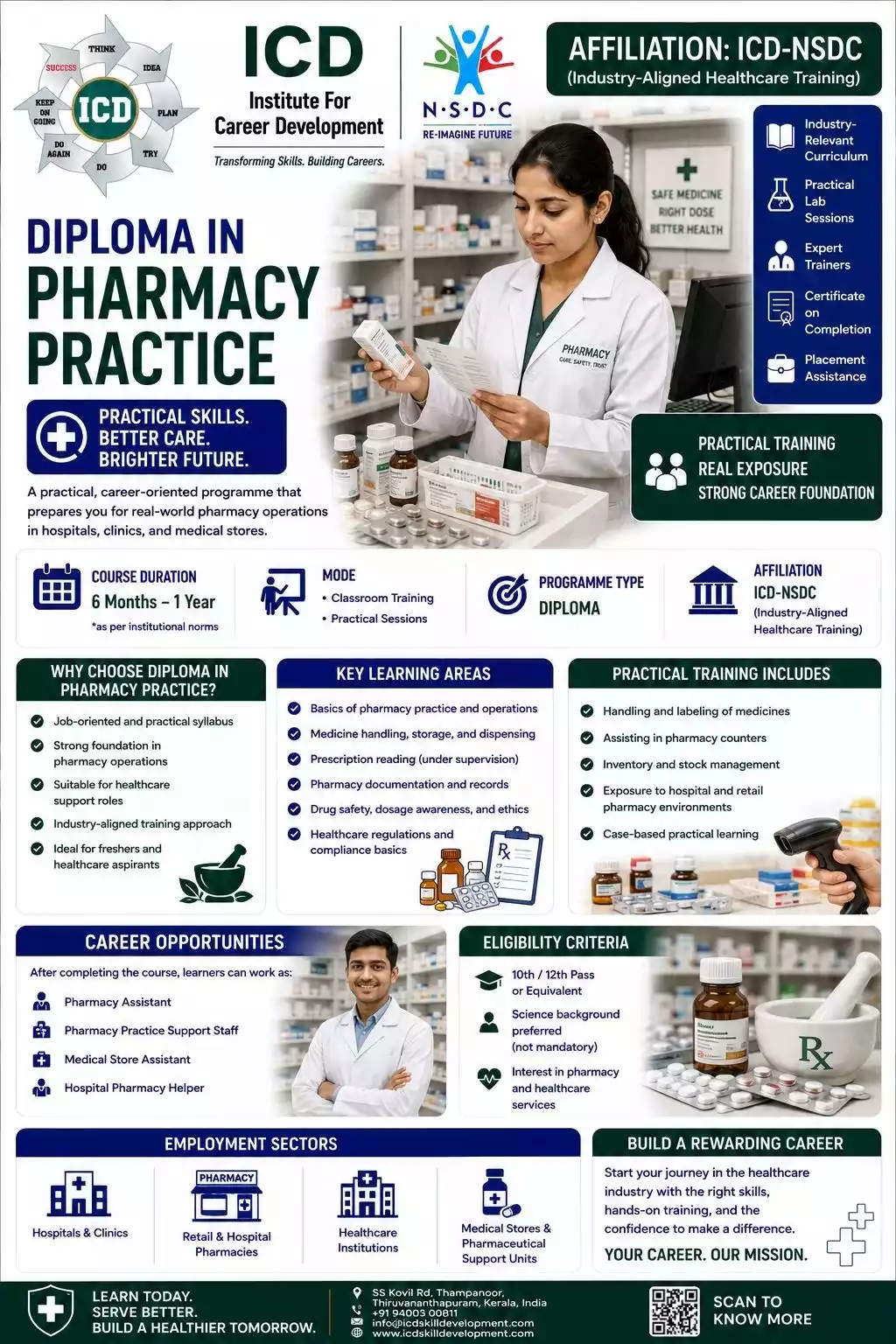
3. Clinical Pharmacology
This branch involves the scientific study of drugs in humans to bridge the gap between laboratory research and bedside medical practice. Clinical pharmacologists conduct clinical trials and analyze drug interactions to optimize dosage regimens and ensure maximum therapeutic benefit with minimal risk.
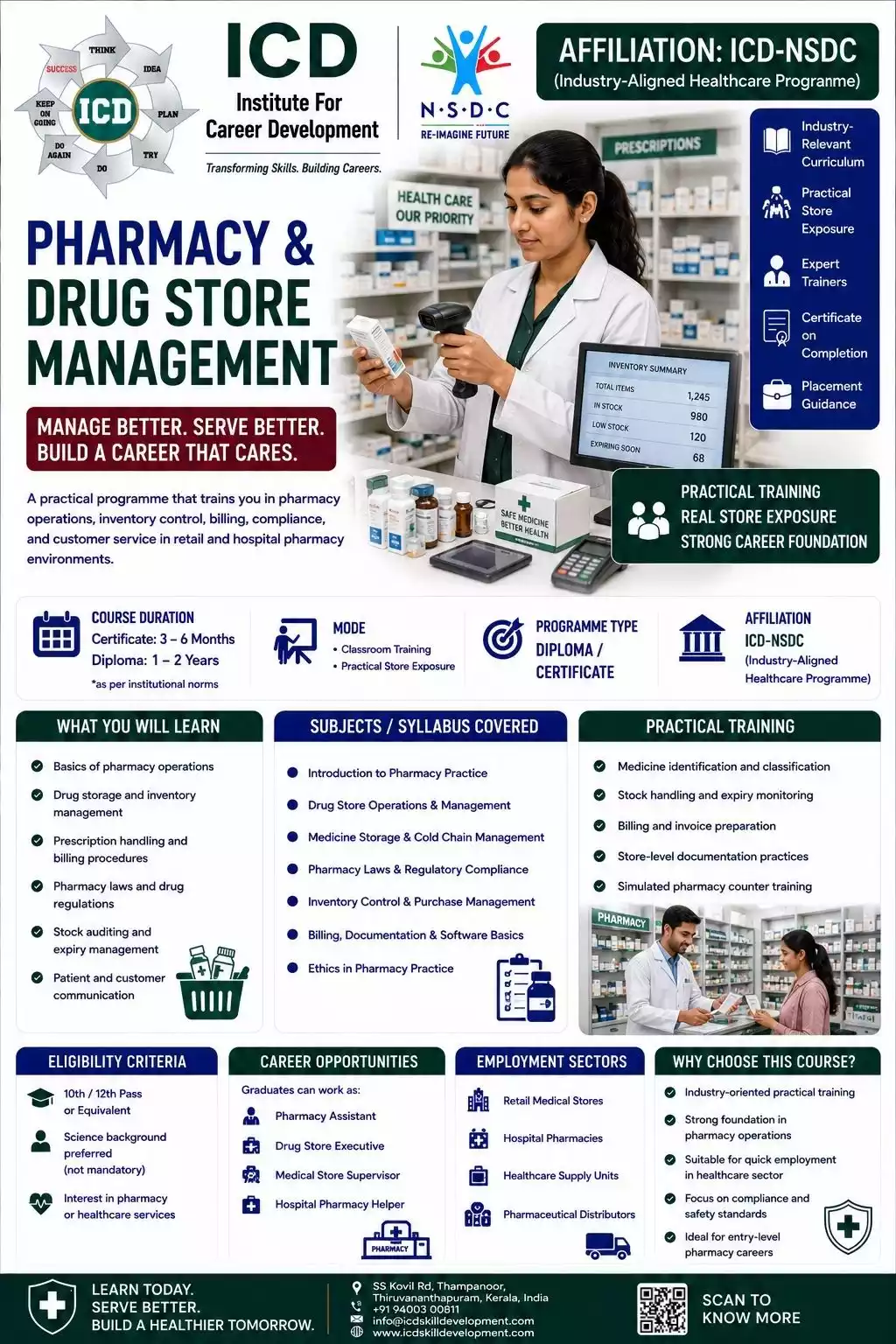
4. Drug Store Management
Drug Store Management covers the operational side of running a pharmacy, including inventory control, supply chain logistics, and legal compliance. It teaches professionals how to manage stock turnover, maintain proper storage conditions (such as cold chains), and handle the financial aspects of a retail or hospital pharmacy.
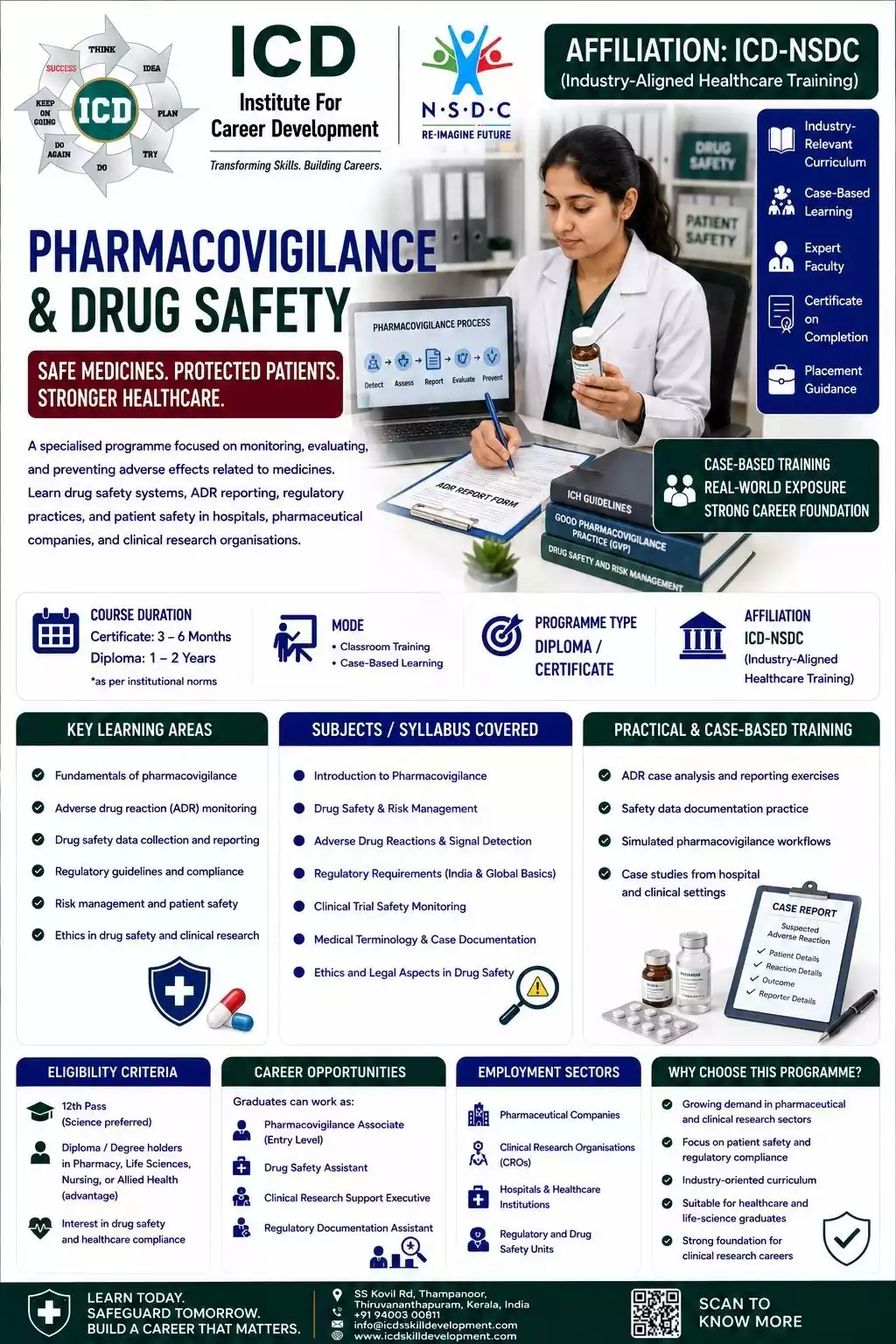
5. Pharmacovigilance
Pharmacovigilance is the science of monitoring the safety of medicines after they have been released to the public. It involves the collection, detection, and assessment of adverse drug reactions (ADRs) to ensure that the long-term benefits of a drug continue to outweigh its risks.

Institute For Career Development,
131A, Uppalam Rd, Near Employment Exchange, Vanchiyoor,
Thiruvananthapuram,
Kerala, India – 695035